
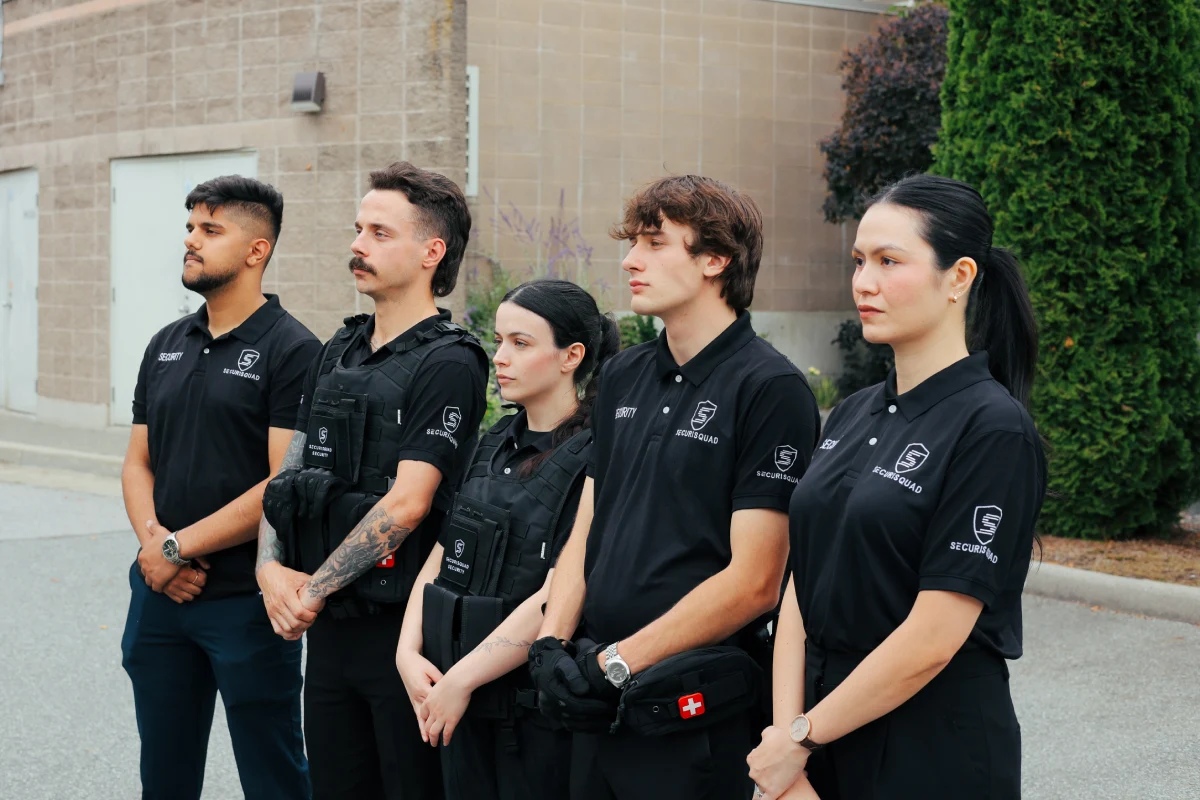
Quick answer: Securing a warehouse or cold-storage facility near Richmond International Airport (YVR) requires a site-specific plan that combines controlled access, perimeter checks, cargo and delivery verification, surveillance, and appropriate security guard coverage. Richmond logistics businesses should also consider overnight activity, contractor access, temperature-sensitive inventory, and the movement of vehicles through loading areas. Professional security helps businesses monitor these risks, document incidents, and respond according to established procedures.
Warehouses near YVR operate in a fast-moving environment. Shipments arrive at different hours, drivers move between loading bays, and employees may work across multiple shifts. Cold-storage facilities face additional operational pressures because interruptions can affect temperature-sensitive products, inventory integrity, and delivery schedules.
A strong security plan should protect people, property, and inventory without slowing down essential warehouse operations.
Why Do Warehouses Near YVR Need a Different Security Approach?
Warehouses and cold-storage facilities in Richmond can have different security requirements from conventional offices or retail premises. Large delivery areas, multiple access points, valuable stock, and frequent vehicle movements can make it harder to maintain consistent oversight.
Several factors deserve particular attention:
- High delivery volumes: Frequent vehicle arrivals can make it difficult to verify every driver, contractor, and shipment.
- Multiple shifts: Overnight and early-morning operations may require security coverage outside standard business hours.
- Valuable inventory: Electronics, pharmaceuticals, food products, and other commercial goods may need additional protection.
- Large property layouts: Fences, loading bays, side entrances, and external storage areas can create monitoring gaps.
- Cold-storage operations: Security incidents involving refrigeration equipment, restricted areas, or utility access may also disrupt temperature-sensitive inventory.
For Richmond businesses, effective protection starts with identifying which areas are most vulnerable and matching security arrangements to actual operating conditions.
7 Practical Ways to Secure a Warehouse or Cold-Storage Facility
1. Control Access to Loading Bays and Entry Points
Loading bays are among the busiest areas of a distribution facility. Employees, delivery drivers, maintenance contractors, and third-party logistics teams may all need access throughout the day.
Without a clear verification process, unauthorized individuals may enter restricted areas or move through the facility unnoticed.
Warehouse managers should establish procedures that include:
- Maintaining an up-to-date list of authorized employees and contractors.
- Verifying delivery appointments and vehicle details.
- Restricting access to designated loading and storage areas.
- Recording visitor entry and exit where appropriate.
- Securing unused entrances, gates, and service doors.
A trained security guard can help enforce these procedures, verify authorized access, and report unusual activity. Access rules should also account for emergency exits and workplace safety requirements.
2. Use Security Guards During High-Risk Operating Hours
A warehouse may be busiest during the day, but security concerns do not necessarily disappear when regular staff leave. Overnight deliveries, unattended loading areas, and reduced staffing can create different monitoring needs.
The appropriate coverage depends on the facility’s layout, inventory, operating schedule, and previous security incidents.
Professional security guard services Canada businesses rely on can include a visible on-site presence, access monitoring, scheduled checks, and incident reporting. For some facilities, a dedicated guard may be appropriate during high-risk shifts. Others may benefit from a combination of on-site coverage and scheduled mobile patrols.
Before selecting a schedule, identify the hours when the property has the least supervision, the greatest vehicle activity, or the highest concentration of valuable inventory.
3. Protect Cold-Storage Areas and Refrigeration Equipment
Cold-storage security involves more than preventing theft. Refrigeration systems, temperature controls, electrical rooms, and restricted service areas may be essential to keeping products within their required storage conditions.
Unauthorized access or an undetected incident in these areas can create operational problems, particularly when perishable or temperature-sensitive products are involved.
Consider these precautions:
- Restrict access to refrigeration plant rooms and equipment areas.
- Keep service access points secured when not in use.
- Establish procedures for approved maintenance contractors.
- Use appropriate temperature-monitoring and alarm systems.
- Document suspicious activity or visible damage around critical equipment.
- Define who must be notified if a security incident could affect refrigeration operations.
Security personnel should follow the facility’s procedures and report relevant concerns promptly. Temperature monitoring and technical refrigeration alarms should remain part of the site’s separate operational safety system.
4. Monitor the Perimeter, Fencing, and Vehicle Routes
A warehouse may have several external access points, including employee parking areas, delivery entrances, vehicle gates, and emergency access routes. Poor lighting, damaged fencing, or obstructed sightlines can make these areas more difficult to supervise.
A regular perimeter inspection can help identify problems before they become larger vulnerabilities.
Facility managers should review lighting around entrances, check fences and gates for visible damage, remove obstructions from critical sightlines, and confirm that external doors close securely.
For larger sites or industrial properties with several buildings, mobile patrol coverage may provide additional oversight. A patrol officer can check designated areas, document visible concerns, and report irregularities according to an agreed schedule.
5. Verify Drivers, Deliveries, and Inventory Movements
Cargo security depends partly on knowing who is authorized to collect or deliver goods and whether the movement matches the facility’s records.
A warehouse should have a consistent process for verifying shipment references, delivery appointments, vehicle details, and authorized collection instructions.
Useful controls include:
- Matching deliveries against approved documentation.
- Confirming the identity and authorization of collection personnel.
- Recording exceptions, discrepancies, or unusual requests.
- Restricting access to inventory storage areas.
- Maintaining appropriate records of loading and unloading activity.
Security guards can support these procedures by monitoring access and escalating discrepancies. Inventory reconciliation and shipment authorization should remain coordinated with warehouse management and the relevant logistics teams.
6. Combine Cameras, Alarms, and Physical Security
CCTV cameras and alarm systems can help identify activity, preserve evidence, and alert the appropriate personnel to potential problems. However, technology is most effective when supported by clear procedures for reviewing alerts and responding to incidents.
For example, a camera may record an unauthorized person entering a restricted area, but the facility still needs a defined process for assessing the alert, notifying the responsible person, and documenting the outcome.
A layered approach can include:
| Coverage Option | When It May Be Suitable |
|---|---|
| On-site security guard | Facilities requiring continuous physical presence, access supervision, or interaction with drivers and visitors. |
| Mobile patrol security | Properties needing checks of external areas, gates, parking lots, or multiple buildings. |
| Combined coverage | Larger or higher-risk facilities requiring an on-site presence alongside additional perimeter checks. |
These measures should work together rather than operate as disconnected systems. Camera placement, access permissions, alarm escalation, and guard duties should be reviewed as part of one coordinated security plan.
7. Create a Clear Incident and Emergency Response Procedure
Even a well-protected facility needs a plan for unexpected events. A suspicious vehicle, unauthorized entry, damaged access gate, or alarm involving a restricted equipment area may require different actions.
Warehouse managers should define who receives incident notifications, who has authority to escalate an issue, and when emergency services must be contacted.
The procedure should also identify the responsibilities of security personnel, warehouse supervisors, facilities teams, and external contractors. Staff should know how to report concerns without putting themselves at unnecessary risk.
For cold-storage facilities, the plan should additionally explain how security personnel notify the appropriate technical team if an incident could affect refrigeration equipment or temperature-sensitive stock.
Clear reporting procedures help reduce confusion and support a more consistent response across shifts.
How Do You Choose a Security Company for a Richmond Warehouse?
Selecting a security provider requires more than comparing hourly rates. Businesses should evaluate whether a company understands industrial property layouts, warehouse access requirements, overnight operations, and the practical demands of logistics facilities.
When comparing a security company Richmond businesses you can work with, consider these questions:
Does the provider offer suitable coverage? Confirm whether it can arrange the on-site guard or mobile patrol schedule your facility needs.
Are the guards properly licensed? Verify that the company and its personnel meet applicable British Columbia licensing requirements.
Can the security plan reflect your operations? Discuss delivery schedules, restricted areas, shift changes, and high-value inventory.
How are incidents documented? Ask about reporting formats, escalation procedures, supervisor communication, and recordkeeping.
Can coverage change as your business grows? Your security needs may change when you add storage space, extend operating hours, or increase shipment volumes.
A written proposal should clearly define the scope of service, hours of coverage, assigned responsibilities, reporting arrangements, and pricing.
Should You Choose On-Site Guards or Mobile Patrols?
Both options can support warehouse security, but they serve different purposes.
| Coverage Option | When It May Be Suitable |
|---|---|
| On-site security guard | Facilities requiring continuous physical presence, access supervision, or regular interaction with drivers and visitors. |
| Mobile patrol security | Properties needing scheduled or randomized checks of external areas, gates, parking lots, or multiple buildings. |
| Combined coverage | Larger or higher-risk facilities requiring an on-site presence alongside additional perimeter checks. |
The best arrangement depends on the property’s risks and operating requirements. A mobile patrol should not be treated as equivalent to a continuously stationed guard when constant supervision is necessary.
Build a Warehouse Security Plan That Fits Your Richmond Facility
Securing a warehouse or cold-storage facility near YVR requires a practical understanding of how the property operates. Access control, inventory verification, perimeter inspections, refrigeration equipment protection, and clear incident procedures all contribute to a stronger security approach.
Businesses should begin by identifying their most important assets, reviewing vulnerable areas, and determining when additional supervision is needed. From there, they can choose a coverage plan that supports their workforce and logistics operations without creating unnecessary delays.
Protect Your Richmond Warehouse with SecuriSquad Services LTD
Every warehouse has different security requirements. A cold-storage facility handling temperature-sensitive products may need a different approach from a distribution centre with frequent overnight deliveries or a large industrial site with multiple external access points.
SecuriSquad Services LTD provides professional security guard and mobile patrol services for commercial and industrial properties, including warehouses and distribution facilities in Richmond. Coverage can be tailored to the site’s layout, operating hours, access requirements, and identified risks.
Contact SecuriSquad Services LTD to discuss your warehouse’s security requirements and request a customized quote.
Frequently Asked Questions
What is the best way to secure a warehouse near YVR?
Start with controlled access, secure loading bays, perimeter inspections, inventory verification, and appropriate camera and alarm coverage. Add on-site guards or mobile patrols according to the property’s layout, operating hours, and risk assessment.
Do cold-storage facilities need specialized security?
They may need additional controls around refrigeration equipment, temperature-sensitive inventory, restricted plant rooms, and maintenance access. Security procedures should complement temperature monitoring, equipment alarms, and the facility’s emergency response plan.
Are security guards necessary for warehouses operating overnight?
Not every warehouse requires a guard throughout the night. However, facilities with valuable inventory, limited overnight staffing, frequent deliveries, or recurring security concerns may benefit from dedicated coverage or scheduled mobile patrols.
What is the difference between warehouse security guards and mobile patrols?
Warehouse security guards can remain on-site to supervise access, observe activity, and report incidents. Mobile patrols visit designated areas at scheduled or randomized intervals. Some facilities use both when their risk assessment supports combined coverage.
How can a Richmond business arrange warehouse security services?
A business can contact a security provider to discuss its location, facility layout, inventory risks, operating hours, and required coverage. The provider should explain its proposed duties, licensing, reporting procedures, and pricing before the service is confirmed.